
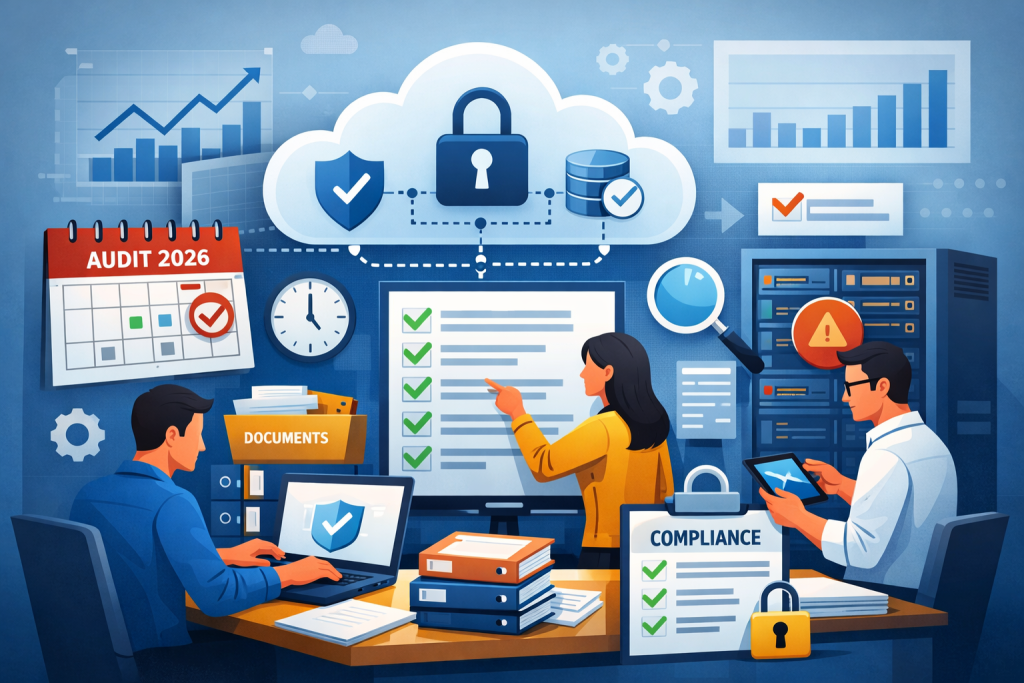
In 2026, cloud audits have become a business-critical reality, not just a compliance checkbox but a strategic imperative. With expanding regulatory expectations, increasingly complex cloud architectures, and heightened scrutiny on security and privacy, companies that delay preparation are setting themselves up for risk, disruption, and costly remediation. Understanding why early audit preparation matters, and acting on it, can be the difference between audit success and reactive firefighting.
1. What Cloud Audits Look Like in 2026
Cloud audits assess whether your cloud systems are secure, compliant, and operating efficiently. They verify security controls, access policies, data governance, and adherence to industry standards like SOC 2, ISO 27001, GDPR, and HIPAA — often all at once. Cloud audits vary in scope and typically include security, compliance, operational, and financial elements. (Zesty)
In 2026, auditors no longer accept ad‑hoc documentation; they expect structured, evidence‑based proof of compliance, ideally automated and continuously maintained. (Cloudnosys)
2. Why Companies Start Too Late
Most organizations wait until an audit is scheduled before they begin preparation. This stems from a combination of common misperceptions:
2.1 False Sense of Readiness
Teams often believe their existing security tools and cloud configurations automatically meet audit requirements. However, a cloud environment’s dynamic nature — with frequent provisioning, scaling, and updates — rapidly invalidates static assumptions. (Zesty)
2.2 Underestimating Documentation Requirements
Cloud audits demand not just implementation of controls but proof of their operation over time — logs, reports, policies, and change histories. Gathering these last‑minute can be chaotic and incomplete.
2.3 Misplaced Responsibility Beliefs
Some companies assume their cloud provider handles all compliance responsibilities. In reality, the shared responsibility model means the provider secures the infrastructure, while you secure your data, identity management, and application configurations. (CyberArk)
3. The Downside of Waiting
Procrastination leads to costly consequences:
3.1 Failed or Delayed Audits
Inadequate preparation often results in auditors pushing deadlines while risks are remediated — potentially delaying product launches or certifications.
3.2 Regulatory and Financial Penalties
Poor audit performance can trigger fines or compliance warnings, especially in regulated industries like healthcare or finance.
3.3 Increased Remediation Costs
The earlier you identify gaps, the cheaper they are to address. Fixing deep structural issues under time pressure is far more expensive than building strong controls over time.
4. The Case for Early Preparation
Shifting from a reactive to a proactive audit strategy delivers clear benefits:
4.1 Continuous Compliance
Audit readiness becomes part of daily operations, reducing stress, risk, and the spike in workload often seen near audit time.
4.2 Enhanced Security Posture
Frequent assessment improves threat detection and response cycles, rather than waiting for auditors to highlight deficiencies.
4.3 Competitive Advantage
Companies that demonstrate robust cloud security and compliance can strengthen customer trust and differentiate themselves in the market.
5. Best Practices for Cloud Audit Readiness
A thoughtful, ongoing approach is essential. Below are actionable strategies to get you audit‑ready early:
5.1 Build a Comprehensive Audit Checklist
Your checklist should cover identity and access management (IAM), encryption, logging, monitoring, documentation, backups, and policy governance — all of which are commonly reviewed in cloud audits. (Zesty)
5.2 Automate Compliance Monitoring
Cloud platforms and third‑party tools can automate evidence collection, configuration tracking, and compliance reporting. Automated monitoring ensures real‑time visibility into compliance drift.
5.3 Train Teams and Assign Accountability
Audit readiness is not a one‑person job. Cross‑functional training and designated compliance owners help distribute responsibility and instill a culture of continuous preparedness. (LinkedIn)
5.4 Understand and Align With Standards
Different industries require different standards. Mapping cloud controls to specific frameworks like GDPR, HIPAA, or ISO helps surface compliance gaps and reduces surprises.
5.5 Maintain Detailed Documentation
Detailed logs, policies, network diagrams, and change histories create a verifiable audit trail — something auditors expect as proof of due diligence.
6. Common Cloud Audit Challenges
Understanding the hurdles helps you plan realistically:
- Complexity and Scale: Cloud environments grow fast and can include virtual machines, containers, and serverless functions. Comprehensive inventory and scope definition are crucial. (Exabeam)
- Shared Responsibility Confusion: Without clarity on who owns specific controls, gaps appear in audit evidence. (CyberArk)
- Dynamic Resource Changes: Frequent configuration changes can outpace manual tracking mechanisms.
- Regulatory Evolution: As data protection regulations update, organizations must adapt their compliance maps proactively.
Conclusion
Today’s cloud audits are rigorous, evidence‑driven evaluations that extend far beyond ticking boxes at the last minute. Preparing early — months rather than weeks ahead — transforms audit readiness from a stressful scramble into a predictable business process. Organizations that embed compliance and security into everyday cloud operations will not only pass audits with confidence but also build stronger security postures and long‑term resilience.
FAQs
Q: What triggers a cloud audit in 2026?
Cloud audits can be triggered by regulatory requirements, contractual obligations with partners or customers, certification needs (e.g., ISO 27001), or internal governance decisions. Regular internal checks help avoid surprises. (Alation)
Q: Who owns compliance in the shared responsibility model?
Cloud providers secure infrastructure, while customers are responsible for data protection, identity management, and application security. Understanding this split early is vital. (CyberArk)
Q: How often should internal audit readiness checks be performed?
Many organizations adopt quarterly internal reviews, with automated monitoring continuous throughout the year.
Q: What tools help automate cloud audit readiness?
Cloud platforms often provide native tools for compliance, logging, and monitoring. Third‑party solutions further enhance automation and reporting.
Q: Can small companies benefit from early audit preparation?
Yes — early readiness helps companies of all sizes avoid penalties, improve security, and streamline operations as they grow.